It started with sparkly vampires
I think it all started with Twilight (i.e. the infamous vampire romance series by Stephenie Meyer).

I was emerging from the newborn baby haze, so I wasn't feeling so wiped out at the end of the day. I could stay up a bit more in the evenings, browsing or surfing. On one of the evenings I happened to stumble across the Twilight movie playing on TV.
I was immediately drawn into this magnetic, histrionic, alternate universe. The intense melodrama. Sparkling vampire teens. Brooding, smouldering looks. Beautiful faces. Beautiful bodies.
It was like eating chocolate candy. So much fun and gives you a good rush when you sink your teeth into it. Junk food essentially. And it's okay to indulge every once in a while.
And so I went through a season of Twi-hard fan mode, binging on this candy for a little while--the movies... the books... celebrity interviews and talk shows with cast members. After I had licked the plate clean many times over, I looked around for more.
That's how my inner bookworm was rekindled.
I combed through our library's online eBook catalogue. Fiction. Non-fiction. Intellectual material. Cringy bingey stuff. Anything that tickled my tastebuds.
I think this was one of the books that set me down that different path:
Zealot
The Life and Times of Jesus of Nazareth
by Reza Aslan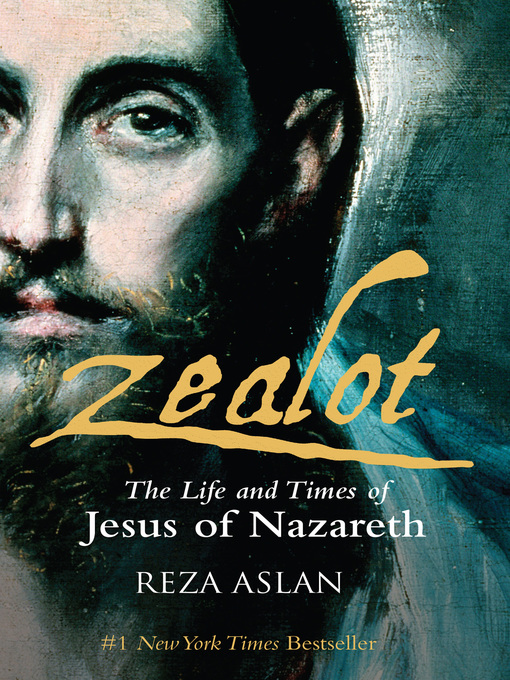
I thought I was picking up a resource to deepen my faith by way of adding more historical context to the person of Jesus.
What I got in the end was not what I expected to find.
Since then, I have come to be aware of the author's dubious credentials. But at the time, I had never really been courted and confronted so directly to consider such controversial questions about the central figure of my faith.
Up till that point, I had always taken C.S. Lewis' Liar-Lord-or-Lunatic trilemma as a rock solid justification for my Christian belief.
It was not a comfortable place to be in. I'm not sure I even agree with all of Reza Aslan's ideas. I am aware of the controversies and his questionable academic rigour on the subject, though I do not claim to have the expertise to completely discredit all of his theories,
But what his book did was to cast a prism of alternate perspectives on my limited view.
Since being introduced to these ideas, I began to learn of the myriad of scholars, academics, historians and scientists who have considered this subject, but did not reach the same conclusions that had always been prescribed to me.
Why should the options be strictly limited to the three purported by C.S. Lewis?
Maybe he was neither on the level of a poached egg, nor the Devil of Hell, nor even (dare I say it) what he claimed to be--God in the flesh.
For the first time, I was beginning to see through some of those flawed presuppositions.
That was the beginning of the first teeny, tiny, microscopic crack in my worldview.
Comments
Post a Comment